Dryer FAQ
Straight answers on choosing a dryer, pilot trials, quotes and service.
- 24+Years of drying engineering
- 30+Installation, commissioning & service team
- 6Dryer types, one engineering team
- ISO9001:2015 certified
FAQ
Choosing a dryer
Which dryer is right for my product?
The form of your feed decides most of it: pumpable liquids suit a spray dryer; loose, crumbly solids a flash dryer; wet cake and sticky paste a spin flash dryer; granules and crystals a fluid bed dryer; sludge a paddle dryer; and viscous, heat-sensitive concentrates an agitated thin film dryer. The dryer finder gives a starting point in three questions.
What is the difference between a spray dryer and a spin flash dryer?
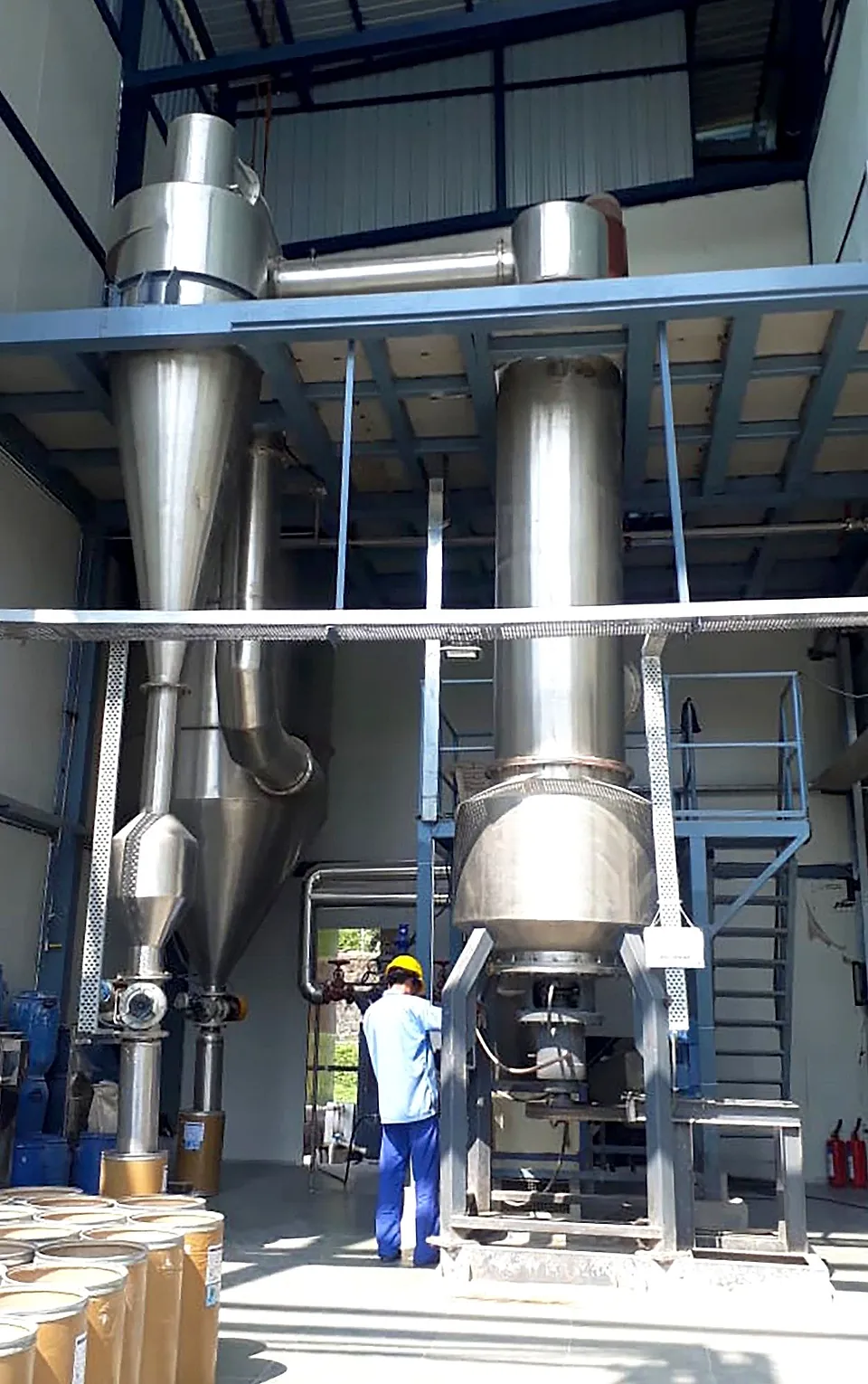
A spray dryer atomizes a pumpable liquid or slurry into droplets that dry into fine powder in a large chamber. A spin flash dryer takes a wet cake or paste that cannot be pumped, breaks it up with a rotor in a swirling hot-air vortex and dries it in seconds. If the feed is a filter cake, a spin flash dryer avoids re-slurrying it.
When should I choose a paddle dryer?
Choose a paddle dryer for sludge, pastes and sticky solids that need long, gentle drying: heat is applied indirectly through hollow paddles and the jacket, so gas flow, dust and odour stay low and solvents can be recovered. Flash and spin flash dryers are faster and more compact but need a feed they can disperse.
When is a fluid bed dryer the better choice?
When the wet solid is granular or crystalline and fluidizes evenly. A fluid bed dryer dries and cools gently with tight control of the final moisture; vibratory, static and batch types cover free-flowing salts, granules, sugar-like crystals and pharma granulates.
What does an agitated thin film dryer (ATFD) dry?
Viscous concentrates, pastes and heat-sensitive liquids. The product is spread as a thin film over a heated wall and wiped by rotor blades, so the residence time is short and solvents can be recovered. It is often used after an evaporator. See agitated thin film dryers.
Can you dry ETP and STP sludge?
Yes. Dewatered ETP and STP sludge is usually dried in a paddle dryer, and some sludges suit a spin flash dryer. See sludge dryers and the paddle dryer guide for sludge drying from AS Engineers.
FAQ
Trials, quotes & service
Can I test my product before buying?
Yes. Acmefil’s R&D centre in Ahmedabad has pilot plants for spin flash (10 kg/hr), flash (10 kg/hr), vibratory fluid bed (10 kg/hr) and spray drying (3 kg/hr), quoted as water evaporation rates. They are open to manufacturers and research institutes at nominal charges. Ask about paddle dryer and ATFD tests when you send your enquiry.
What should I send for a quote?
Your product and its form (liquid, cake, paste, sludge, granules), feed moisture, final moisture, required capacity in kg/hr, heat source available (gas, oil, coal, biomass, steam or thermic fluid), and whether the product is heat-sensitive, sticky, abrasive or solvent-wet. A lab report helps.
Do you supply complete plants?
Yes – design, engineering, supply, erection, commissioning and operator training, including the feed system, hot air generator, cyclone, bag filter, ID fan and PLC automation.
Do you offer service, spares and upgrades?
Yes – genuine spare parts, plant upgrades and rebuilds, annual maintenance contracts and technical support, for Acmefil plants and others.
How are Acmefil and AS Engineers related?
Both are Ahmedabad companies of the same group. Acmefil Engineering Systems builds spray, flash, spin flash, fluid bed and agitated thin film dryers, evaporators and ZLD plants. AS Engineers builds paddle and sludge dryers, centrifugal blowers and air-handling equipment. You deal with one team either way.
Free proposal
Tell us about your product. We will recommend the dryer.
Share the product, feed moisture, final moisture and capacity – get a dryer recommendation, a budget quote and a pilot-trial option within one working day.