Introduction: The Rising Demand for Paddle Dryers in India’s Industrial Landscape
In India’s rapidly expanding industrial sector, efficient sludge management has become a critical challenge across multiple industries. Paddle dryers have emerged as the preferred solution for businesses seeking cost-effective, energy-efficient thermal drying equipment. As the country’s manufacturing capabilities grow, finding a reliable paddle dryer manufacturer in India has become essential for companies looking to optimize their waste processing systems. Among the leading companies in this specialized field, AS Engineers has established itself as a premier paddle dryer manufacturer in India, combining innovative engineering with proven technology to deliver superior drying solutions.
The paddle dryer market in India has witnessed remarkable growth in recent years, driven by stricter environmental regulations and the increasing need for sustainable waste management practices. This comprehensive guide explores everything you need to know about paddle dryers, their applications, and why choosing the right manufacturer makes all the difference in your operational efficiency and environmental compliance.
Table of Contents
What Makes Paddle Dryers Essential for Modern Industries?
The Technology Behind Paddle Dryers
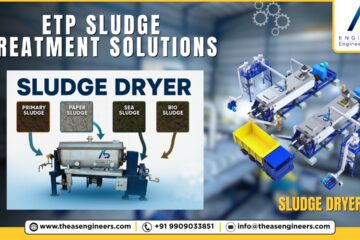
Paddle dryers represent a significant advancement in thermal drying technology, offering unique advantages over conventional drying methods. These indirect heat dryers utilize a sophisticated system of hollow rotating paddles inside a stationary trough. Both the paddles and trough contain heating media (typically steam or thermal oil), creating an efficient heat transfer mechanism that processes difficult-to-handle materials like industrial sludge, biomass, and various wet solids.
The genius of paddle dryer design lies in its mechanical simplicity combined with thermal efficiency. As the paddles rotate, they continuously mix the material, exposing new surfaces to heat while preventing material from sticking to heated surfaces. This continuous agitation ensures uniform drying without hot spots or burning—a common issue with direct heat dryers.
Key Industries Benefiting from Paddle Dryer Technology
Paddle dryers have become indispensable across numerous industries in India, each with specific requirements and challenges:
- Municipal Wastewater Treatment: Converting sewage sludge into manageable, pathogen-free biosolids for safe disposal or beneficial reuse.
- Pharmaceutical Manufacturing: Drying sensitive compounds with precise temperature control to maintain product integrity.
- Chemical Processing: Handling hazardous or corrosive sludges safely while recovering valuable solvents.
- Food Processing: Ensuring hygienic processing of food by-products for animal feed or further processing.
- Textile Industry: Treating dye-laden sludge and recovering valuable materials while reducing disposal volumes.
- Pulp and Paper Mills: Converting paper sludge into a form suitable for energy recovery or landfill.
- Mining and Mineral Processing: Drying mineral concentrates and recovering process water.
The versatility of paddle dryers makes them ideal for India’s diverse industrial landscape, where a single technology must often adapt to varying input materials and processing requirements.
AS Engineers: Leading Paddle Dryer Manufacturer in India
Company Overview and Expertise
As a premier paddle dryer manufacturer in India, AS Engineers has built its reputation through decades of specialized engineering excellence. The company combines deep technical knowledge with practical industry experience to design and manufacture paddle dryers that meet international standards while addressing India-specific challenges.
What distinguishes AS Engineers from other manufacturers is their comprehensive approach to thermal drying solutions. Rather than offering one-size-fits-all equipment, they approach each project as a unique engineering challenge, considering factors such as:
- Material characteristics and variability
- Processing capacity requirements
- Energy source availability and cost
- Space constraints
- Environmental compliance needs
- Long-term operational costs
This holistic perspective allows AS Engineers to deliver paddle dryer systems that not only meet immediate processing needs but continue to perform optimally throughout their operational lifespan.
Manufacturing Capabilities and Quality Standards
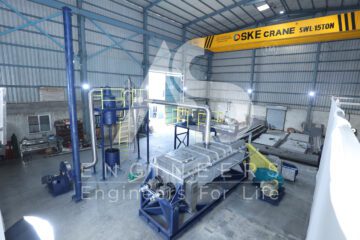
AS Engineers maintains state-of-the-art manufacturing facilities that enable them to produce paddle dryers with exceptional precision and quality. Their manufacturing process incorporates:
- Advanced CNC machining for critical components
- Rigorous material testing and certification
- Precision welding with comprehensive non-destructive testing
- Multi-stage quality control inspections
- Full assembly testing before shipment
Every paddle dryer manufactured by AS Engineers undergoes comprehensive testing to verify performance parameters including heat transfer efficiency, mechanical stability, and seal integrity. This commitment to quality ensures that when their equipment reaches customer sites, it performs exactly as specified from day one.
Customization Options for Diverse Applications
Understanding that different industries and processes have unique requirements, AS Engineers offers extensive customization options for their paddle dryers:
- Material Construction: From standard stainless steel to specialized alloys for corrosive applications
- Heating Media Options: Steam, thermal oil, or electric heating systems
- Control Systems: Basic manual controls to fully automated operation with remote monitoring
- Integration Capabilities: Seamless integration with existing process equipment and control systems
- Capacity Scaling: From pilot-scale units to full industrial production systems
This flexibility allows AS Engineers to serve as a paddle dryer manufacturer in India capable of addressing the full spectrum of industrial drying challenges.
Technical Specifications and Performance Features of Modern Paddle Dryers
Design Innovations in Contemporary Paddle Dryers
Modern paddle dryers manufactured by leading companies like AS Engineers incorporate several innovative design features that enhance performance and reliability:
- Optimized Paddle Geometry: Advanced computational fluid dynamics has led to paddle designs that maximize contact surface while minimizing material buildup.
- Enhanced Heat Transfer Surfaces: Specialized surface treatments and materials that improve thermal conductivity while resisting fouling.
- Self-Cleaning Mechanisms: Specially designed wipers and scrapers that prevent material accumulation on heat transfer surfaces.
- Efficient Sealing Systems: Sophisticated mechanical seals that prevent leakage even with abrasive materials.
- Variable Speed Drive Systems: Allowing precise control of residence time and mixing intensity based on material properties.
These innovations have significantly improved the efficiency and reliability of paddle dryers, making them more economical to operate while handling increasingly challenging materials.
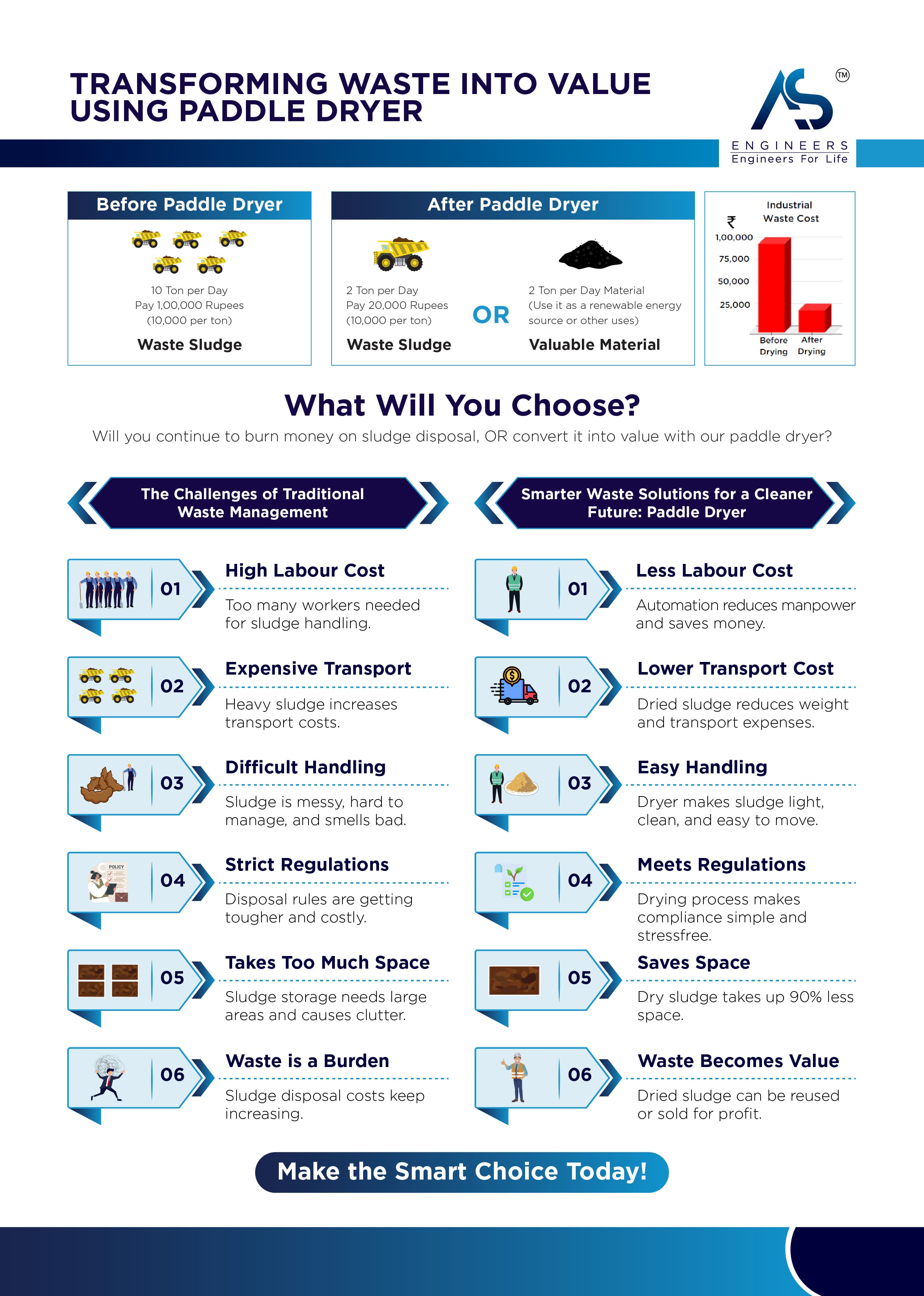
Energy Efficiency and Environmental Considerations
In today’s energy-conscious industrial environment, the efficiency of drying equipment has become a primary consideration. Paddle dryers excel in this regard, offering several advantages:
- Low Specific Energy Consumption: Typically requiring 30-50% less energy than direct dryers for the same moisture reduction
- Heat Recovery Options: Ability to capture and reuse waste heat from the evaporated moisture
- Closed-Loop Process Design: Minimizing emissions and odor while recovering volatile compounds
- Reduced Carbon Footprint: Lower energy consumption translates directly to reduced greenhouse gas emissions
AS Engineers has placed particular emphasis on enhancing the energy efficiency of their paddle dryers, incorporating heat recovery systems and optimized insulation to minimize heat losses during operation.
Automation and Control Systems
The level of automation in modern paddle dryers has transformed them from basic mechanical equipment to sophisticated process systems. Today’s paddle dryers typically feature:
- PLC-Based Control Systems: Providing precise control of all operating parameters
- Human-Machine Interfaces: User-friendly touchscreen controls with intuitive graphics
- Data Logging and Analysis: Continuous recording of performance data for process optimization
- Remote Monitoring Capabilities: Allowing oversight and troubleshooting from anywhere
- Integration with Plant-Wide Control Systems: Seamless operation within larger manufacturing environments
These advanced control systems ensure consistent product quality while minimizing operator intervention and reducing the potential for human error.
Installation, Commissioning, and Maintenance Best Practices
Site Preparation and Installation Requirements
Proper installation is critical to the long-term performance of paddle dryers. As an experienced paddle dryer manufacturer in India, AS Engineers provides comprehensive guidance for site preparation including:
- Foundation Requirements: Specifications for concrete pads, vibration isolation, and anchoring systems
- Utility Connections: Detailed requirements for steam, electrical, and condensate return systems
- Space Allocation: Clearance requirements for operation, maintenance, and future modifications
- Ancillary Equipment Positioning: Optimal arrangement of feed systems, discharge conveyors, and control panels
Their installation teams work closely with client engineering departments to ensure all site preparations meet the exact requirements of the specific paddle dryer system being installed.
Commissioning Process and Performance Verification
The commissioning process translates a newly installed piece of equipment into a fully functional process system. AS Engineers employs a structured commissioning methodology that includes:
- Pre-Start Inspections: Comprehensive mechanical and electrical checks before initial startup
- Phased Startup Sequence: Gradually introducing heat and feed material to verify proper operation
- Parameter Optimization: Fine-tuning operational settings to match actual feed characteristics
- Performance Testing: Verifying throughput, moisture removal, and energy consumption meet specifications
- Operator Training: Hands-on instruction for client personnel on day-to-day operation and troubleshooting
This methodical approach ensures each paddle dryer performs to specification from the start, minimizing disruptions to client operations.
Preventive Maintenance Schedules and Practices
To maximize equipment lifespan and minimize unplanned downtime, AS Engineers provides detailed maintenance programs for their paddle dryers:
- Daily Inspection Checklists: Simple visual and operational checks performed by operators
- Weekly Maintenance Tasks: Regular lubrication and adjustment procedures
- Monthly Component Inspections: More detailed examination of critical components
- Annual Overhaul Guidelines: Comprehensive inspection and replacement of wear parts
By following these maintenance protocols, users of AS Engineers paddle dryers typically achieve operational reliability rates exceeding 98%, with many systems running continuously for years with only scheduled maintenance stops.
Case Studies: Successful Implementation of Paddle Dryers in Indian Industries
Municipal Wastewater Treatment Success Story
A major municipal corporation in western India faced increasing challenges managing biosolids from its expanded wastewater treatment facilities. Disposal costs were rising dramatically, and land application options were limited by pathogen concerns and seasonal restrictions.
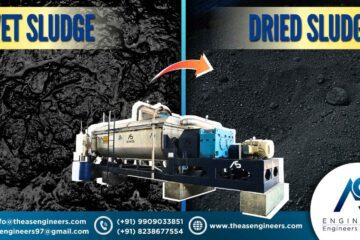
AS Engineers designed and installed a custom paddle dryer system that reduced sludge volume by over 75% while eliminating pathogens through the thermal process. The dried biosolids achieved Class A classification, opening multiple beneficial reuse pathways, including agricultural application and composting.
Key outcomes included:
- Reduction in disposal costs by 62%
- Elimination of seasonal storage requirements
- Creation of a marketable byproduct with agricultural value
- Significant reduction in transportation-related emissions
The project achieved full return on investment in less than three years, demonstrating the economic viability of advanced sludge drying even for public sector entities.
Pharmaceutical Manufacturing Application
A leading pharmaceutical manufacturer needed to process API (Active Pharmaceutical Ingredient) production waste with strict temperature control requirements. The material contained valuable solvents that needed recovery, while the resulting dry material required safe handling and disposal.
AS Engineers developed a specialized paddle dryer with explosion-proof design and precise temperature control. The system included solvent recovery condensers and closed-loop handling to prevent worker exposure to potentially hazardous materials.
The implementation resulted in:
- Recovery of over 95% of reusable solvents
- Volume reduction of waste material by 84%
- Complete elimination of liquid waste disposal
- Significantly improved workplace safety metrics
This application showcased the flexibility of paddle dryer technology in handling sensitive materials with multiple processing objectives.
Comparing Paddle Dryers with Alternative Drying Technologies
Technical Comparison: Paddle Dryers vs. Direct Dryers
When evaluating drying technologies, understanding the key differences between indirect systems like paddle dryers and direct heat systems is essential:
| Parameter | Paddle Dryers | Direct Heat Dryers |
|---|---|---|
| Heat Transfer Method | Conduction through heated surfaces | Convection from hot gases |
| Energy Efficiency | High (80-90%) | Moderate (50-70%) |
| Temperature Control | Precise | Limited |
| Dust Generation | Minimal | Often significant |
| Explosion Risk | Low | Higher with combustible materials |
| Emissions | Minimal, easily captured | Often requires extensive air treatment |
| Footprint | Compact | Typically larger |
| Material Flexibility | Handles sticky, pasty materials well | Struggles with cohesive materials |
For most industrial applications in India, paddle dryers offer significant advantages in terms of energy efficiency, emissions control, and operational flexibility.
Economic Analysis: Initial Investment vs. Lifetime Operational Costs
While paddle dryers often require higher initial investment than simpler drying technologies, the total cost of ownership calculation reveals their economic advantage:
- Energy Costs: The superior efficiency of paddle dryers typically saves 30-40% in energy costs over the equipment lifetime.
- Maintenance Expenses: The robust mechanical design and fewer moving parts result in lower annual maintenance costs and less downtime.
- Environmental Compliance: Reduced emissions and easier containment minimize the need for expensive air treatment systems.
- Operational Labor: Higher automation levels reduce operator requirements and associated labor costs.
- By-product Value: Better preservation of material properties often results in higher-value end products or easier disposal options.
When these factors are considered over a typical 15-20 year equipment lifespan, paddle dryers from quality manufacturers like AS Engineers consistently demonstrate lower total cost of ownership despite higher initial capital expenditure.
Selecting the Right Paddle Dryer for Your Application
Key Parameters for Sizing and Selection
Choosing the optimal paddle dryer requires careful consideration of several critical factors:
- Feed Material Characteristics:
- Initial moisture content range
- Desired final moisture content
- Material density and consistency
- Presence of abrasives or corrosives
- Thermal sensitivity
- Processing Requirements:
- Throughput capacity (kg/hr or tons/day)
- Continuous vs. batch operation
- Integration with upstream/downstream processes
- Available utilities (steam pressure, electrical supply)
- Site Constraints:
- Available floor space
- Height restrictions
- Ambient conditions
- Noise limitations
- Access for maintenance
- Regulatory Considerations:
- Emission standards
- Worker safety requirements
- Product certification needs (for food/pharma applications)
AS Engineers provides comprehensive consultation services to help clients navigate these considerations and select the optimal paddle dryer configuration for their specific needs.
Questions to Ask Your Paddle Dryer Manufacturer
When evaluating potential paddle dryer manufacturers in India, asking the right questions can help ensure you select a partner capable of meeting your specific requirements:
- What testing facilities do you have for material trials?
- Can you provide references from clients in similar industries?
- What is your manufacturing capacity and typical lead time?
- What level of after-sales support do you provide?
- How do you handle spare parts availability and emergency service?
- What customization options are available for my specific application?
- What warranty terms do you offer on equipment and components?
- Do you provide operator training and documentation?
- What energy recovery options can be integrated with the dryer?
- How does your equipment comply with industry standards?
The answers to these questions will help distinguish between vendors selling commoditized equipment and true manufacturing partners like AS Engineers who provide comprehensive solutions.
Future Trends in Paddle Dryer Technology
Emerging Innovations and Research Directions
The field of thermal drying continues to evolve, with several exciting developments on the horizon:
- Advanced Materials: New alloys and surface treatments that enhance heat transfer while extending component life.
- Digital Twin Technology: Creating virtual models of drying systems that allow predictive maintenance and performance optimization.
- Hybrid Systems: Combining indirect heating with selective direct heating for optimized energy efficiency.
- Intensified Processing: Designs that achieve higher throughput in smaller equipment footprints.
- Alternative Energy Integration: Solar thermal and biomass energy sources integrated directly with drying systems.
AS Engineers remains at the forefront of these innovations, regularly incorporating proven new technologies into their paddle dryer designs while maintaining the reliability that has established them as a leading paddle dryer manufacturer in India.
Sustainability and Circular Economy Applications
Perhaps the most significant trend in paddle dryer applications is their increasing role in circular economy initiatives:
- Resource Recovery: Extracting valuable materials from waste streams that were previously sent to disposal
- Energy Generation: Preparing challenging waste materials for use as alternative fuels
- Water Reclamation: Recovering process water for reuse within manufacturing operations
- Zero Liquid Discharge Systems: Enabling complete elimination of liquid waste streams
- Carbon Footprint Reduction: Minimizing the environmental impact of waste processing operations
As India continues its industrial growth while facing increasing environmental challenges, these sustainability applications of paddle dryer technology will become increasingly important in the national drive toward cleaner production and circular economy principles.
Installation and Operating Costs: What to Expect
Typical Capital Expenditure Ranges
When budgeting for a paddle dryer system, several factors influence the required investment:
- Processing Capacity: Costs typically scale with capacity, though not linearly
- Material Construction: Specialized alloys for corrosive applications increase costs
- Automation Level: Basic through fully automated systems offer different price points
- Ancillary Equipment: Feed systems, discharge handling, and control integration
- Site Preparation: Foundation work, utilities connection, and safety systems
For standard industrial applications in India, basic paddle dryer systems typically start at ₹50-60 lakhs for smaller capacities, with larger systems for municipal or heavy industrial use ranging from ₹1.5-5 crores, depending on capacity and specifications.
AS Engineers provides detailed quotations based on specific application requirements, with a transparent breakdown of costs for the main equipment and associated systems.
Operating Cost Components and Optimization Strategies
Understanding the ongoing costs of paddle dryer operation allows for better financial planning and process optimization:
- Energy Consumption: Typically the largest operating cost, ranging from ₹1,000-4,000 per ton of water evaporated depending on energy source
- Maintenance Supplies: Including lubricants, seals, and routine replacement parts
- Labor Requirements: Operator and maintenance technician time
- Consumables: Any additives or process aids required for specific applications
Cost optimization strategies recommended by AS Engineers include:
- Heat recovery systems to reduce primary energy consumption
- Preventive maintenance programs to extend component life
- Operator training to ensure optimal process settings
- Feed conditioning to improve drying efficiency
- Automation upgrades to reduce labor requirements
Implementing these strategies can reduce operating costs by 15-30% compared to basic operation, significantly improving the return on investment for paddle dryer systems.
FAQ: Common Questions About Paddle Dryers
What materials can be processed in a paddle dryer?
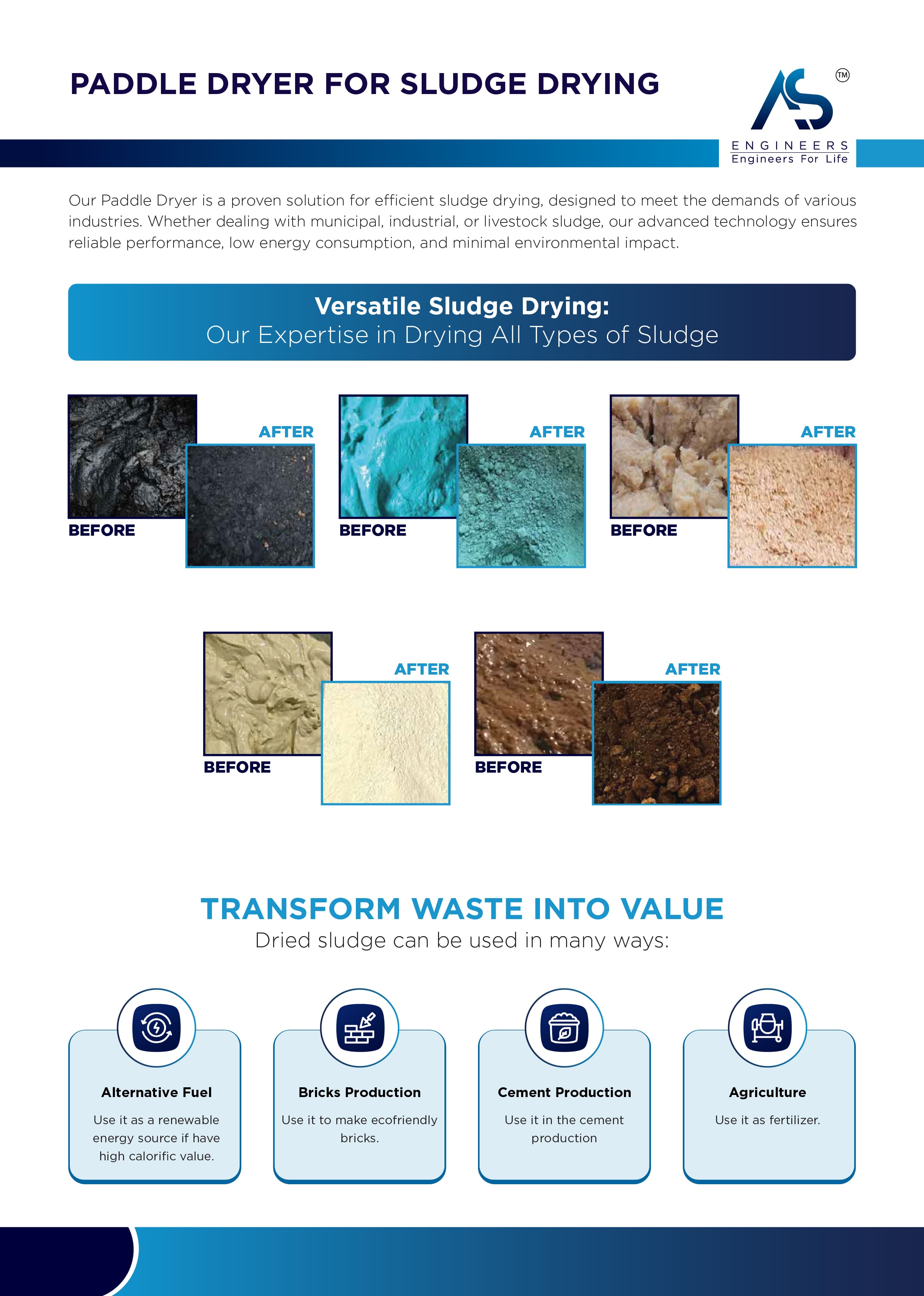
Paddle dryers excel at handling a wide range of materials including municipal and industrial sludges, biomass, chemical compounds, food by-products, and mineral slurries. They are particularly effective with materials that tend to be sticky or pasty during the drying process. AS Engineers can conduct material testing to confirm suitability for specific applications.
How does a paddle dryer compare to a rotary dryer in terms of efficiency?
Paddle dryers typically achieve 30-40% higher energy efficiency than rotary dryers due to their indirect heating method that minimizes heat losses. They also offer better temperature control, lower emissions, and superior handling of difficult materials that might cause caking or buildup in rotary systems.
What maintenance is required for paddle dryers?
Routine maintenance includes inspection of drive components, lubrication of bearings, checking seal integrity, and occasionally replacing wear parts such as paddles or seals. AS Engineers paddle dryers are designed for easy maintenance access, with most routine procedures requiring only basic tools and minimal downtime.
Can paddle dryers handle materials with varying moisture content?
Yes, this is one of their key advantages. The continuous mixing action and precise temperature control allow paddle dryers to accommodate significant variations in feed moisture content while still delivering consistent output quality. Advanced control systems can automatically adjust operational parameters to compensate for feed variations.
What is the typical return on investment period for a paddle dryer?
Most industrial applications achieve ROI within 2-5 years, depending on factors such as disposal cost savings, energy costs, and operational hours. Municipal applications often see returns in 3-7 years, primarily through reduced disposal volumes and transportation savings.
Conclusion: Making the Right Choice for Your Drying Needs
Selecting the right paddle dryer manufacturer in India is a critical decision that impacts operational efficiency, product quality, and long-term costs. As this guide has illustrated, paddle dryers offer significant advantages for a wide range of applications, particularly when designed and manufactured with the expertise demonstrated by companies like AS Engineers.
The key to success lies in thorough evaluation of your specific requirements, careful selection of equipment specifications, and partnership with a manufacturer that offers not just equipment but comprehensive support throughout the project lifecycle. By considering the factors outlined in this guide and asking the right questions, you can ensure that your investment in paddle dryer technology delivers optimal results for your specific application.
As India’s industrial sector continues to grow and environmental regulations become increasingly stringent, the role of efficient thermal processing equipment will only become more important. Paddle dryers represent a mature yet continuously evolving technology that perfectly balances performance, efficiency, and reliability for today’s challenging processing requirements.
This comprehensive guide was developed to provide valuable insights into paddle dryer technology and manufacturing in India, with particular focus on the capabilities and expertise of AS Engineers as a leading paddle dryer manufacturer.