Introduction: Choosing a Sludge Dryer Manufacturer Could Be the Most Critical Waste Management Decision You Make
A few years ago, a food processing company in Maharashtra faced a nightmare scenario: tons of sludge piling up faster than they could dispose of it. It was wet, foul-smelling, and expensive to haul. When the monsoon hit, their waste area flooded, creating an environmental hazard, and they were slapped with a warning from the local pollution board.
They didn’t have a sludge problem.
They had a sludge dryer manufacturer problem.
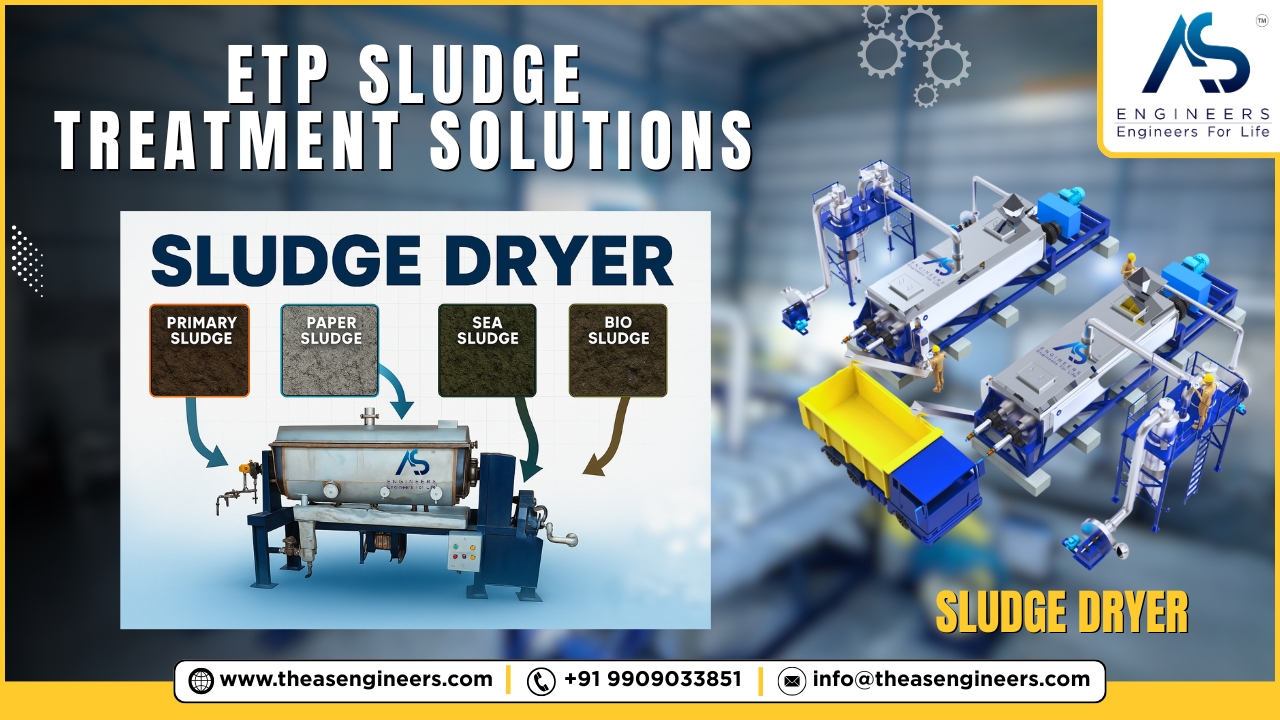
Sludge dryers are more than machines; they’re the final gatekeepers between your industrial operations and environmental compliance. Whether you’re dealing with oily refinery sludge, sticky pharma waste, or fibrous pulp from paper mills, the right dryer saves you money, space, and legal risk.
But here’s the catch: choosing the wrong manufacturer can set you up for years of inefficiency, repairs, and fines. That’s why we created this no-fluff guide to help industries make the right choice when selecting a sludge dryer manufacturer that understands the science behind the sludge.
In this blog, you’ll learn:
- What sludge dryers do and how they work
- Which industries benefit from customized dryers
- Key red flags in poor manufacturers
- Real success stories from AS Engineers installations
- A checklist to help you evaluate manufacturers like a pro
Ready to dry your waste the right way? Let’s dive in.
What Is a Sludge Dryer & Why Does Every Industry Need One?
What is a Sludge Dryer?
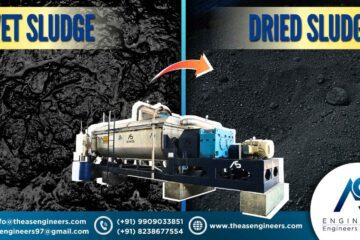
A sludge dryer is a mechanical system that removes moisture from industrial or municipal sludge, converting it from a semi-liquid mass into a dry, manageable, and often reusable form. By lowering moisture content often from 70–80% to below 10% sludge dryers dramatically reduce waste volume, odor, transportation costs, and environmental impact.
This equipment is used at the final stage of wastewater treatment or effluent treatment processes, especially when landfill disposal or reuse requires moisture control.
Why Sludge Dryers Are Essential for Industrial Plants
For many industries, sludge is not just a by-product, it’s a growing liability. Here’s why investing in a high-quality sludge dryer (and a trusted sludge dryer manufacturer) is crucial:
Volume Reduction
Dryers can shrink sludge volume by up to 70–80%, saving huge costs on transportation, storage, and disposal.
Regulatory Compliance
Environmental agencies (like CPCB in India or EPA globally) have strict disposal standards. Proper sludge drying helps industries meet moisture and handling requirements to avoid penalties.
Odor & Hygiene Control
Moist sludge is a breeding ground for bacteria and foul smells. Dry sludge is odorless, non-hazardous, and easier to handle.
Energy Recovery & Reuse
Dried sludge, especially from the textile, food, and chemical sectors, can be reused as refuse-derived fuel (RDF) or even in boilers, depending on its calorific value.
Scalability
With rising production volumes, sludge generation increases. A reliable dryer helps scale your waste treatment efficiently without adding storage or staff.
Industries That Require Sludge Dryers
If your plant operates in any of the following sectors, sludge drying isn’t optional, it’s essential:
- Pharmaceuticals & Chemicals: Toxic, heat-sensitive sludge
- Food & Beverage: Organic, high-moisture sludge
- Pulp & Paper: Fibrous, sticky sludge
- Textiles: Colorants, synthetic additives
- Oil & Gas: Oily, hazardous sludge
- Steel & Cement: Heavy particulate-laden sludge
- Municipal Wastewater: High-volume, pathogen-rich sludge
What Sets a Great Sludge Dryer Manufacturer Apart?
Many companies can supply drying machinery, but only a few truly understand the chemistry, behavior, and challenges of sludge. That’s where AS Engineers stands out.
We design sludge dryers that aren’t just machines, they’re engineered solutions tailored to your industry, plant conditions, and waste profile.
How Sludge Dryers Work: A Step-by-Step Breakdown for Industrial Users
Understanding the inner workings of a sludge dryer helps plant managers and engineers make better decisions when selecting equipment. While the mechanisms may vary slightly depending on the type (paddle, rotary, vacuum, etc.), the core sludge drying process generally follows these six critical steps:
Step 1: Sludge Feeding
The process begins with transferring wet sludge from your ETP or STP system to the dryer.
Feeding systems include:
- Screw conveyors
- Pumps (for slurry-type sludge)
- Hoppers or manual loading for cake-form sludge
AS Engineers customizes the feeding system based on sludge consistency to avoid clogging and ensure smooth, continuous operation.
Step 2: Heat Introduction (Indirect or Direct)
Dryers use heat to evaporate water from the sludge. There are two main heating types:
- Indirect heating: Using thermic fluid oil, steam, or electricity (ideal for sticky or hazardous sludge)
- Direct heating: Using hot air or flue gases (common in municipal or fibrous sludge)
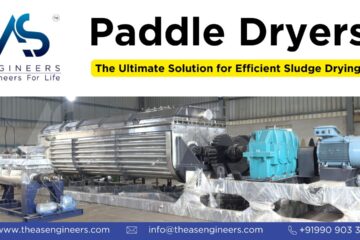
Our paddle dryers at AS Engineers use indirect heating, ensuring:
- No direct contact between the sludge and the heat source
- Controlled, uniform heating
- Better emissions management
Step 3: Mixing & Agitation
As the sludge is heated, internal paddles or rotating mechanisms agitate and mix the sludge, breaking it into smaller particles for uniform drying.
Benefits:
- Prevents clumps
- Increases heat transfer surface area
- Reduces drying time
Our dual-zone paddle dryers adjust rotation speed and temperature per zone for optimal results.
Step 4: Moisture Evaporation & Vapor Collection
The heat causes the moisture inside the sludge to evaporate. This vapor is captured through ducts and directed to:
- Cyclone separators
- Wet scrubbers
- Condensers
- Activated carbon filters
AS Engineers offers integrated odor control and vapor handling systems, ensuring emissions remain within local pollution control norms.
Step 5: Discharge of Dried Sludge
Once moisture is removed, the dried sludge exits the dryer via:
- Gravity discharge chutes
- Screw conveyors
- Bagging stations
Depending on the sludge, the dried material may appear as powder, granules, or flakes. It’s now ready for disposal, storage, or reuse as boiler fuel.
Step 6: Energy Recovery & System Optimization
High-end dryers are designed for energy recovery. At AS Engineers, we implement:
- Closed-loop thermic fluid systems
- Exhaust gas heat recovery units
- PLC-controlled temperature and moisture sensors
This minimizes operational cost and maximizes efficiency, especially for industries with continuous sludge generation.
Real Output Example:
At a textile ETP in Rajasthan, our 500 kg/hr paddle dryer reduced sludge from 78% to 10% moisture, with dried sludge reused as boiler fuel, saving ₹9.2 lakhs annually in disposal and fuel costs.
Key Features to Look for in a Sludge Dryer Manufacturer
Choosing the right sludge dryer manufacturer is not just about picking a vendor; it’s about choosing a partner who understands your waste, your plant, and your long-term compliance needs. A wrong choice can lead to frequent breakdowns, high operating costs, or even regulatory fines.
Here’s what to look for before signing the purchase order:
1. Customization Capability
No two sludges are alike. The ideal manufacturer must:
- Analyze your sludge composition (moisture, pH, stickiness, solids)
- Design the system accordingly paddle size, material of construction, heat source, etc.
- Offer modular setups that scale with production growth
AS Engineers offers sludge testing and system customization, ensuring perfect process-fit rather than forcing you into a one-size-fits-all solution.
2. Industry Experience & Case Studies
A trusted manufacturer should have:
- Experience in your specific industry (pharma, chemical, textile, etc.)
- Case studies or testimonials proving past performance
- Installations in environments similar to yours
With 800+ sludge dryers installed and over 3,000 satisfied clients, AS Engineers has a track record across 25+ sectors.
3. Compliance-Ready Design
The dryer must meet:
- Pollution control board norms (vapor handling, odor control)
- Safety certifications (ISO, CE, TUV)
- Materials compatibility (SS316L, Hastelloy, etc., for corrosive sludge)
All AS Engineers dryers are built to be compliance-ready by design, reducing audit stress for your EHS team.
4. Energy Efficiency
Ask about:
- Thermal fluid or heat recovery systems
- Vapor condensation setups
- Real-world energy usage (kWh/ton of sludge)
- Our dryers use indirect heating with closed-loop thermic systems and are engineered for low energy consumption, saving you money year after year.
5. Maintenance & Service Network
Many manufacturers disappear after delivery. A reliable partner should offer:
- AMC plans
- Readily available spares
- A responsive service network
AS Engineers has 20+ service engineers stationed across India and provides lifetime service support with preventive maintenance schedules.
6. PLC Automation & Remote Monitoring
A modern sludge dryer should have:
- Fully automated controls
- HMI/PLC interface with adjustable parameters
- Remote troubleshooting options (IoT-based)
Our dryers are IoT-ready and integrate seamlessly with your SCADA or DCS systems, allowing plant teams to monitor operations from anywhere.
7. Proven Post-Installation ROI
Don’t just look at CAPEX. Ask the manufacturer to calculate:
- Operational cost per ton of dried sludge
- Energy consumption
- Reduction in disposal trips and labor
One AS Engineers client saved ₹15 Lakhs annually in landfill and logistics after switching to our paddle dryer.
Choosing a sludge dryer is an engineering decision. But choosing a sludge dryer manufacturer is a strategic one.
Go beyond brochures. Ask for data, field performance, and service benchmarks.
Why AS Engineers Is Among the Top Sludge Dryer Manufacturers in India
In a competitive market full of catalog sellers and general equipment providers, AS Engineers stands apart as a true engineering-driven sludge dryer manufacturer. We don’t just deliver machines, we deliver tailored, future-ready solutions that work seamlessly with your plant’s real-world operations.
Here’s what makes us the preferred partner for over 3,000 industrial clients across India and beyond:
25+ Years of Specialization in Drying & Pollution Control
We’ve been building and optimizing sludge drying systems since the late ’90s. Our expertise spans:
- Paddle dryers
- Vacuum dryers
- Dual-zone drying systems
- Emission control integration
- Custom automation & retrofits
With each passing project, we’ve fine-tuned our designs for maximum efficiency, safety, and durability.
In-House Design, Fabrication & Quality Testing
Every AS Engineers product is:
- Designed in-house by our expert team
- Fabricated in our ISO-certified facility
- Tested for performance & safety before dispatch
This end-to-end control ensures uncompromised quality—unlike traders or outsourced assemblers.
Customization is Our Default Setting
We’ve never sold two identical dryers. Every project starts with:
- Real sludge testing (free for serious clients)
- Thermal and mechanical calculations
- Custom material of construction (SS304, SS316L, CS, Hastelloy, etc.)
- Application-specific accessories (bagging stations, scrubbers, condensers)
We treat every sludge as a unique problem to solve not just a sale to close.
Nationwide Service Network
With a dedicated team of 20+ field service engineers, we provide:
- On-site installation & commissioning
- Operator training
- AMC support
- 24/7 emergency response
- Preventive maintenance plans
We ensure that once your plant starts running, it keeps running no matter the season, load, or sludge variation.
Real ROI, Backed by Data
Our clients routinely report:
- 70–80% reduction in sludge volume
- 30–50% drop in waste handling cost
- Compliance with local PCB norms
- Payback periods as short as 14–18 months
One specialty chemical client in Gujarat saved ₹2.3 crores over 5 years with our vacuum paddle dryer, just in sludge handling and disposal.
Certifications & Quality Assurance
- ISO 9001:2015 Certified
- TUV-certified systems
- All components are compliant with the Pollution Control Board & industrial safety standards
We don’t just promise quality we prove it through process, documentation, and inspection.
When you’re dealing with sludge, you need more than a machine. You need a manufacturer who understands your plant, your sludge, your energy costs, and your regulatory obligations.
That’s the AS Engineers advantage.
Case Studies: How Our Sludge Dryers Deliver Results in the Real World
To truly understand the impact of an expertly engineered sludge dryer, let’s look at how AS Engineers’ solutions have transformed real industrial operations across India.
Each of the following stories highlights how we tailored our technology to client-specific challenges and delivered measurable success.
1. Textile Industry – Replacing Inefficient Solar Drying
Client: Mid-size textile mill, Ahmedabad
Problem:
- Relied on open-air solar drying
- Seasonal backlog due to monsoons
- Regulatory pressure due to odor and overflow
Solution:
Installed a 500 kg/hr indirect paddle dryer with thermic fluid heating and an integrated vapor scrubber.
Results:
- Sludge moisture reduced from 78% to below 12%
- Drying cycle reduced from 3–4 days to under 3 hours
- Dried sludge now reused as boiler fuel
- Full ROI in just 13 months
Client Feedback:
“Your dryer didn’t just solve a waste issue, it became a fuel solution for our boiler room.”
2. Pharmaceutical Plant – Managing Sticky, Toxic Sludge
Client: API manufacturer, Hyderabad
Problem:
- Sludge was acidic and viscous
- The prior dryer failed due to corrosion and clogging
- High odor complaints from the nearby industrial zone
Solution:
Deployed a vacuum paddle dryer with SS316L internals and flameproof electricals. Included PLC automation and a gas-phase scrubber.
Results:
- Zero unplanned downtime in 14 months
- Odor levels dropped by 90%
- Dried sludge passed hazardous waste disposal tests
- Energy usage dropped 30% compared to the previous setup
Plant Head:
“We were on the verge of shutting our ETP. Now, we meet every compliance metric with zero worries.”
3. Pulp & Paper Mill – From Wet Waste to Fuel Resource
Client: Paper manufacturer, Maharashtra
Problem:
- High-volume fibrous sludge (12 tons/day)
- Difficult to compress or transport
- Disposed in bulk at high cost
Solution:
Installed a high-torque paddle dryer with fiber-handling paddles and an automated bagging unit.
Results:
- Moisture reduced from 70% to 10%
- Dried sludge used as solid fuel in an on-site boiler
- Annual savings: ₹14.6 Lakhs
- Reduced 80 truckloads per year in disposal logistics
Owner’s Statement:
“Your solution paid for itself twice over in fuel savings alone.”
4. Petrochemical Refinery – Handling Hazardous Oily Sludge
Client: Multinational refinery, Gujarat
Problem:
- Flammable sludge
- High ambient temperatures
- Needed ATEX-rated safety compliance
Solution:
Designed and delivered a flameproof paddle dryer with nitrogen blanketing, heat recovery loop, and inert gas safety system.
Results:
- Moisture cut from 68% to 8%
- Zero accidents or ignition events
- All vapor emissions neutralized
- Operated continuously in 3 shifts without failure
EHS Officer:
“AS Engineers didn’t just meet our safety spec—they wrote it into the equipment DNA.”
These aren’t just dryer installations. They’re strategic waste management upgrades built on data, discipline, and long-term results.
FAQs on Sludge Dryer Manufacturers
1. What does a sludge dryer manufacturer do?
A sludge dryer manufacturer designs, fabricates, and supplies equipment that removes moisture from industrial sludge. They also support installation, commissioning, and after-sales to ensure operational efficiency and regulatory compliance.
2. Which industries need a sludge dryer?
Sludge dryers are essential for:
- Pharmaceuticals
- Chemicals
- Textiles
- Petrochemicals
- Pulp & Paper
- Food Processing
- Municipal wastewater plants
Any industry generating semi-solid waste from effluent or treatment processes can benefit from sludge drying.
3. What should I look for in a sludge dryer manufacturer?
Key factors include:
- Experience in your industry
- In-house manufacturing capabilities
- Customization based on sludge properties
- Energy-efficient and compliant designs
- Field service and AMC support
AS Engineers checks all these boxes with 25+ years of experience and 800+ successful installations.
4. How much does an industrial sludge dryer cost?
Costs vary based on capacity, material of construction, automation level, and sludge type. On average:
- 100 kg/hr systems may start at ₹8–10 Lakhs
- 500–1000 kg/hr systems can range ₹25–50 Lakhs+
Requesting a site-specific proposal from a trusted manufacturer like AS Engineers ensures you get accurate, need-based pricing.
5. How long does it take to install a sludge dryer?
Typical installation and commissioning take 4–8 weeks post-manufacturing, depending on scope, civil readiness, and site conditions. AS Engineers also offers fast-track commissioning for urgent requirements.
Conclusion: Choose a Sludge Dryer Manufacturer Who Builds More Than Just Machines
In today’s industrial environment, efficient sludge handling is non-negotiable. It affects your plant’s economics, regulatory scorecard, and environmental footprint. And the foundation of that efficiency lies in choosing the right sludge dryer manufacturer.
A well-built dryer will serve you for 10–15 years. A poor one will cost you more in repairs, inefficiencies, and downtime than it’s worth.
At AS Engineers, we bring over two decades of domain experience, engineering expertise, and end-to-end service that starts from sludge testing and goes all the way to full-scale operation and AMC.
🔍 Ready to Transform Your Sludge Management Strategy?
👉 Schedule a free consultation
👉 Request on-site sludge testing
👉 Get a customized drying solution built for your plant
📧 Email: sales@theasengineers.com
🌐 Website: https://theasengineers.com