Paddle Dryer
Paddle Dryer Price in India (2026): What Really Drives the Cost
Quick answer: a paddle dryer in India typically costs between ₹6.5 lakh for a small 100–200 kg/hr unit and ₹30 lakh+ for a large automated sludge-drying system — but the purchase price is only 30–40% of what you will actually spend. Energy, manpower and maintenance over five years routinely exceed the invoice value. This guide breaks down both, so you can compare quotes on total cost, not sticker price.
Updated November 2026 · Written by the process engineering team at Acmefil Engineering Systems Pvt. Ltd., Ahmedabad
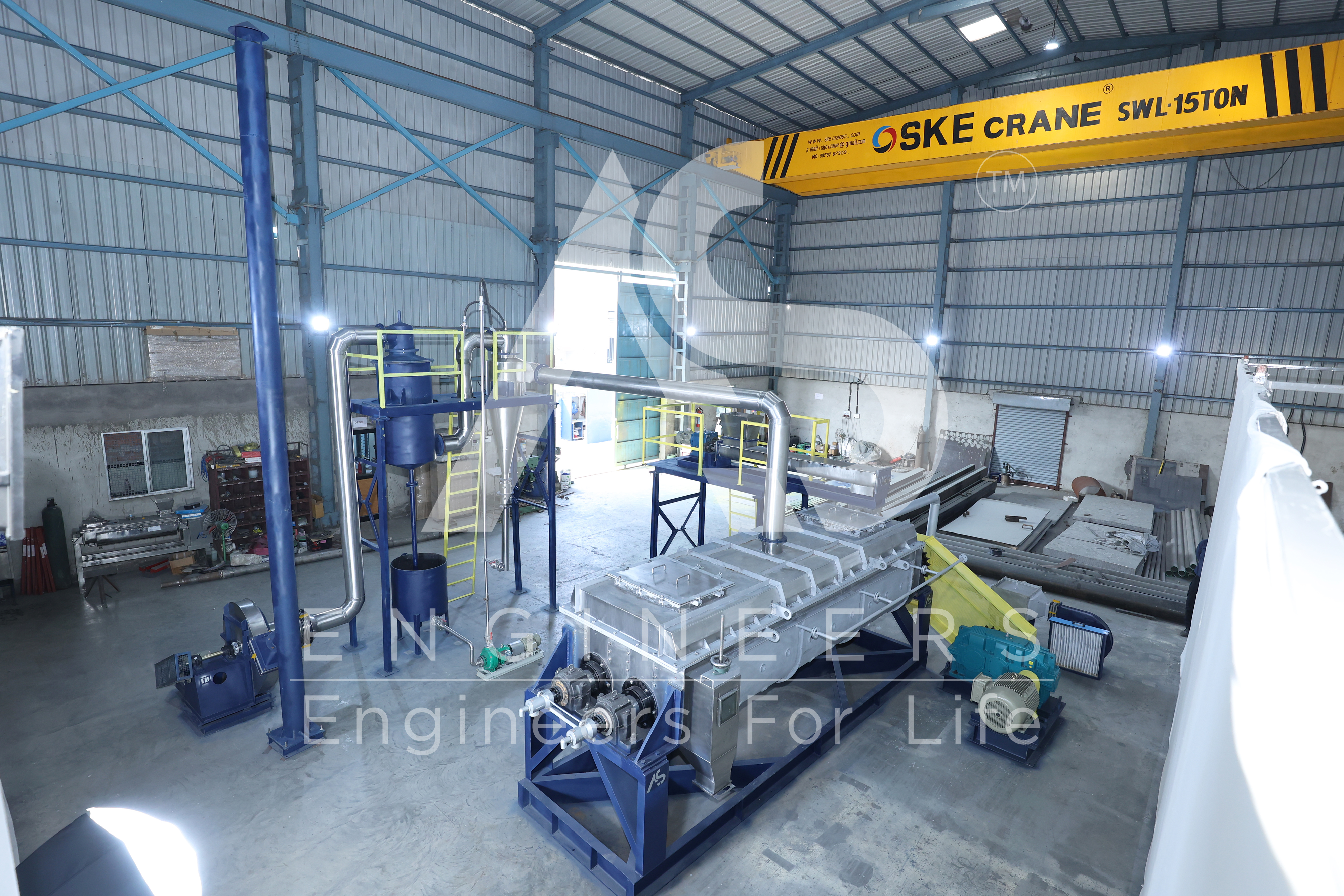
Paddle dryer price ranges in India (2026)
Indicative ex-works ranges for hollow-paddle (paddle-type) dryers, based on current Indian market listings and typical Acmefil project engineering:
| Configuration | Evaporation capacity | Typical price band (₹) |
|---|---|---|
| Compact paddle dryer, electric/steam, manual discharge | 50 – 150 kg/hr water | 6.5 – 12 lakh |
| Mid-size sludge paddle dryer, steam-heated, SS contact parts | 150 – 500 kg/hr | 12 – 20 lakh |
| Large ETP/ZLD sludge system with feeder, discharge, dust handling & PLC | 500 – 1,500 kg/hr | 20 – 35 lakh |
| Custom multi-dryer train with heat recovery | 1,500+ kg/hr | 35 lakh+ |
What is not included in these bands: feed pumps and conveyors upstream, steam or hot-water generation if you do not already have it, civil work, insulation cladding, freight and commissioning. Ask every vendor to quote the battery limits explicitly — this is where “cheap” quotes become expensive.
Need the machine itself first? See our paddle dryer product page for construction and specifications.
8 factors that move your quote up or down
1. Water to evaporate, not sludge to process
Drying cost scales with evaporation load, not wet tonnage. 1 TPH of sludge at 75% moisture needs ~690 kg/hr of water evaporated to reach 10%; the same sludge pre-dewatered to 60% needs only ~540 kg/hr. Every point of upstream dewatering is money you do not spend on the dryer.
2. Heat source you already have
Steam from an existing boiler is the cheapest route. Thermic fluid suits higher temperatures. Adding a dedicated steam generator can add ₹3–8 lakh to a project — and 8–15% to running cost if it is oversized.
3. Material of construction
- MS with SS contact parts: cheapest, fine for neutral sludges
- SS304 wetted parts: standard for ETP and chemical sludge
- SS316 or higher: chlorides, acidic or pharmaceutical feeds
MOC swing alone can be 20–40% of the dryer price. Corrosion-driven replacements cost far more than the delta — match MOC to the worst batch you will run, not the average one.
4. Indirect vs jacket-only design
Hollow paddles plus jacketed trough (full indirect) transfer roughly 3–5× more heat per m² than jacket-only troughs, so the machine — and its footprint — shrinks for the same duty. A cheaper jacket-only quote usually means a bigger machine and higher steam draw for life.
5. Automation level
Manual discharge and local panels keep first cost low. PLC + VFDs + remote monitoring add ₹1.5–4 lakh but typically save one operator shift per day — often ₹2–3 lakh/year for an ETP plant running two shifts.
6. Odour and vapour handling
Enclosed vapour hood, condenser and ID fan can add ₹2–6 lakh. For municipal or food-industry sludge, skip this and your neighbours — and the pollution board — will find you.
7. Testing before engineering
A pilot trial on your actual sludge costs little but de-risks the single most expensive mistake in drying: buying capacity for a feed that behaves differently in the trough than in the lab. Any manufacturer who will not pilot-test a difficult sludge is selling you a drawing, not a solution.
8. After-sales reach
Spares, seal kits and rotor service matter more in year 3 than any feature in year 1. Check the response-time commitment, whether rotor rebalancing is done in-house, and whether wear parts are standard sizes you can source locally.
Running cost: the number that decides ROI
For a steam-heated paddle dryer, expect roughly:
| Cost head | Typical value (India, 2026) |
|---|---|
| Specific steam consumption | 1.4 – 1.8 kg steam per kg water evaporated |
| Energy cost per kg water | ₹0.9 – 1.8 (at ₹2,500–4,500/T boiler fuel; higher on FO/diesel) |
| Manpower | 0.5 – 1 operator per shift (automated) |
| Spares & maintenance | 2 – 4% of machine cost per year |
| Disposal saving | ₹2,000 – 8,000 per tonne of wet sludge avoided (hauling + landfill) |
Worked example: an ETP producing 2 T/day of sludge at 78% moisture, dried to 10%.
- Water evaporated ≈ 1.4 T/day → steam ≈ 2.2 T/day → energy ≈ ₹3,000–5,000/day
- Disposal avoided ≈ 2 T wet → ₹4,000–16,000/day at typical hauling rates
- Payback for a ₹15–20 lakh system: typically 12–30 months, before counting recovered product value (fuel blending, construction additive, etc.)
Paddle dryer vs the alternatives on cost
| Paddle (indirect) | Flash (direct) | ATFD | |
|---|---|---|---|
| Suits sludge/paste | Excellent | Only friable, non-sticky feeds | Excellent, incl. viscous concentrates |
| Thermal efficiency | Highest (indirect, no exhaust loss) | Lower (hot gas carries the heat) | High |
| Footprint | Smallest for the duty | Large duct runs | Compact |
| Typical Indian price band | ₹6.5 – 35 lakh | ₹8 – 25 lakh | ₹15 – 45 lakh |
| Watch-outs | Max temp limited by jacket medium | Feed must pump/pneumatically convey | Rotor-clearance maintenance |
5 questions that expose a weak paddle dryer quote
- “What is your guaranteed U-value / heat transfer area — calculated or catalogued?” Catalogued numbers collapse on sticky sludges.
- “Show me a pilot report on a feed like mine, with moisture in/out and kW per kg evaporated.”
- “What exactly is inside your battery limits — list the instruments.”
- “Rotor bearing and seal design? What is the seal life on my feed?”
- “Which spares are standard catalogue items I can buy locally in 2029?”
Frequently asked questions
What is the starting price of a paddle dryer in India?
Small steam or electric units (50–150 kg/hr evaporation) start around ₹6.5 lakh ex-works. Most ETP/ZLD projects land between ₹12–30 lakh including discharge and dust handling.
How much does it cost to dry sludge per kg?
Energy alone runs ₹0.9–1.8 per kg of water evaporated on steam. All-in (energy + labour + maintenance), plan ₹2–4 per kg of water — against disposal savings of ₹4–15 per kg of dried solids.
Is a paddle dryer cheaper than an ATFD?
Generally yes at equal evaporation duty — ATFDs are built for viscous, heat-sensitive concentrates and ZLD trains where the last 5–10% moisture must be recovered as clean condensate. For ordinary dewatered sludge cakes, a paddle dryer is the economical choice.
Can I pilot-test a paddle dryer before buying?
Yes — pilot trials on 10–50 kg/hr units are the standard de-risking step. Acmefil runs pilot trials at our Ahmedabad facility on your actual sludge before we quote production equipment.
What capacity paddle dryer do I need for 2 T/day of wet sludge?
At 75–80% inlet moisture drying to 10%, that is ~700–900 kg/hr peak evaporation — typically a mid-size steam-heated system in the ₹12–20 lakh band.
Get your actual price in 48 hours
Share your sludge type, inlet/outlet moisture and daily quantity — a process engineer (not a salesperson) replies with a sizing note and budgetary quote. Contact us or WhatsApp +91 98250 13851.
About the author: Process Design Team, Acmefil Engineering Systems Pvt. Ltd. — 24+ years in industrial drying, 800+ dryers commissioned across India.
Send your feed details and capacity. We reply with a dryer recommendation, budget quote and a pilot-trial option.
Get my proposalWhatsApp
Process engineers at Acmefil Engineering Systems Pvt. Ltd. and AS Engineers, Ahmedabad – designers and manufacturers of spray, paddle, flash, spin flash, fluid bed and agitated thin film dryers since 2000.